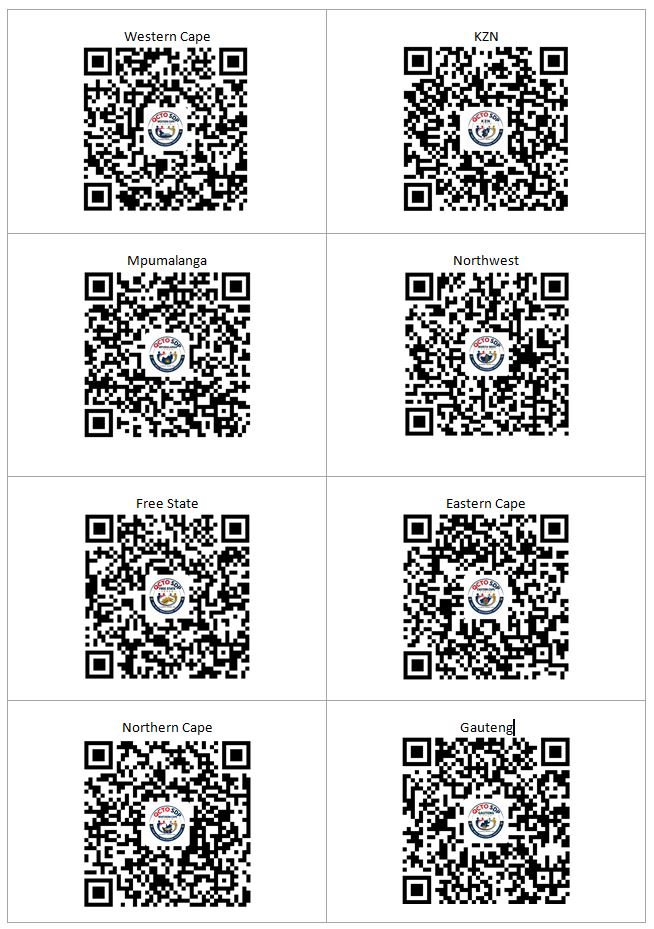
These forums exist because the QCTO itself proposed them as a channel for engagement with private SDPs. At the 2025 stakeholder engagements, the QCTO indicated that it would engage with private SDPs through WhatsApp groups and even provided a link for providers to join.
In a sequence of events that surprised absolutely no one, the link didn’t work, private SDPs were then told to establish the groups themselves, with the understanding that the QCTO would engage through them. The SDPs did exactly that. Yet, nearly a year later, the QCTO has not joined the groups, engaged through them or, at time of writing, formally recognised them.
I strongly encourage private SDPs to join and participate in their regional SDP forums. These groups are a very positive development. They allow private providers to share information, identify common problems, support one another and, importantly, begin developing a stronger collective voice.
If you are already involved in a regional forum, help other SDPs find it.
My hope is that these forums eventually help create real, structured engagement between private SDPs and the QCTO. That is where I believe their real value lies.
This is a good movement, and it is worth protecting from becoming just another WhatsApp group where SDPs collectively complain about things they cannot change. The opportunity is much bigger than that.
Engagement should not simply mean the QCTO telling SDPs what it requires, but also listening to what private SDPs are experiencing and asking what it can do better.
That is entirely consistent with the Batho Pele principles which describe what is expected of public institutions funded by South African taxpayers. Consultation and responsiveness require more than communicating instructions clearly; they require listening to the people who actually use the service – it is in the whitepaper.
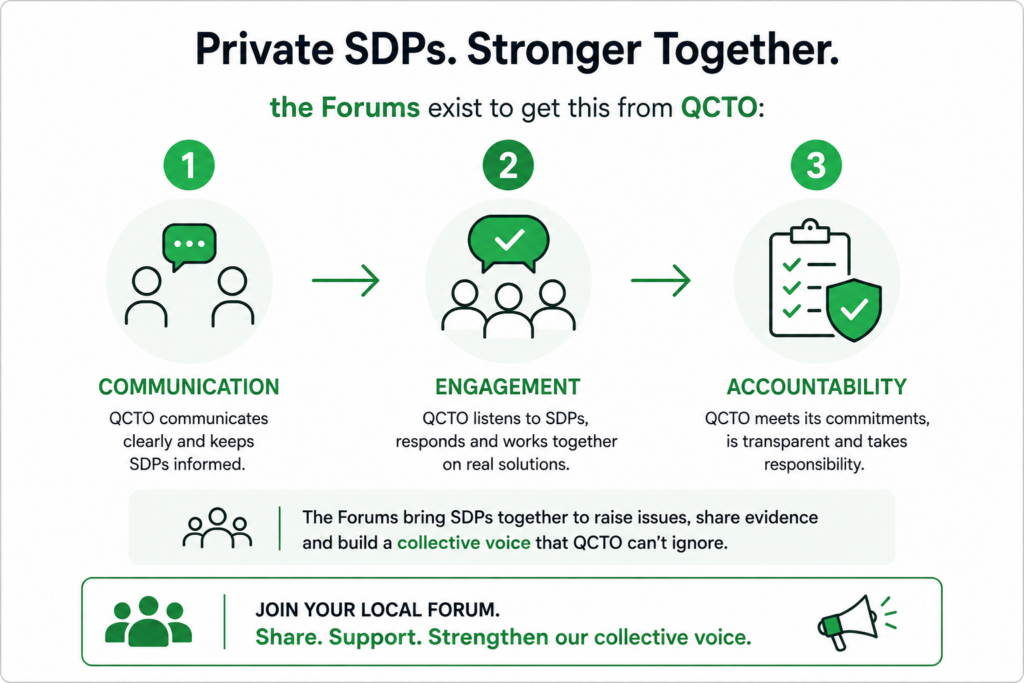
Getting there requires three fairly simple steps. The first has already begun: better communication. The second is genuine two-way engagement. And, if we can get those two right, the third should follow naturally: accountability.
Credit where it is due: I think QCTO communication has improved. There has been a noticeable effort to communicate requirements more clearly, issue guidance and tell SDPs what is expected of them. Anyone who has spent years trying to navigate unclear or changing requirements should welcome that improvement and clarity.
Better communication solves a very real problem for private SDPs. When requirements are clear, providers can comply with them. When requirements are unclear, inconsistently interpreted or only discovered halfway through a process, even a perfectly willing SDP can get things wrong.
But communication is not the same thing as stakeholder engagement. Communication can be entirely one-way: the QCTO tells private SDPs what it requires, and private SDPs receive that information.
Genuine stakeholder engagement requires information to travel in both directions. This is not just my opinion, this is Batho Pele.
During QCTO SDP engagement, the next question cannot simply be, “Do you have any questions?” It also needs to be: “What problems are you experiencing, and what can we do to serve you better?” That changes the relationship from explaining the system to actually listening to the people who work within it every day. And again, that is Batho Pele.
Private SDPs collectively know an enormous amount about where QCTO processes work. And where they don’t. They experience the applications, portals, response times, accreditation requirements and administrative systems firsthand. When dozens of providers experience the same problem, that information should be reaching the QCTO.
As a consultant working across many SDPs, I see recurring problems that individual providers may believe are isolated. Often because they have been told exactly that. Yet when I have raised these as collective or systemic problems, I have repeatedly encountered three responses:
1 – The evidence is simply ignored. No engagement, no action, a complete stonewalling.
2 – Communication is moved away from those with visibility across multiple cases and back to those who do not, allowing the problem to once again be treated as an isolated incident.
3- Threats: The person raising the problem is threatened, even to the popint of legal action.
Threatened? Unfortunately, yes. The QCTO Legal Services Unit even threatened me with legal action.
They effectively demanded that I tear down my entire website. They instructed me to remove and never again publish the name “QCTO” or the names of specified staff members, citing POPIA as their legal basis. I declined, disputed their position and invited them to properly articulate their concerns (because POPIA is clearly not it). Their deadline passed and their fervour fizzled.
This website helps people. It will not be removed.
So while QCTO communication has improved somewhat, genuine engagement still has some way to go!
Step 1 is about communicating more clearly. Step 2 requires being willing to hear uncomfortable feedback, investigate recurring problems and engage constructively with those raising them. Trying to silence a dissenting voice is the opposite of that.
A good example came from the latest QCTO stakeholder engagement, when a private SDP challenged the QCTO about turnaround times that are simply not being met. He used learner certification as a clear example of a systemic problem, and other SDPs in the room immediately confirmed the same experience. QCTO could not say this was isloated this time, because there are too many participants in the meeting at the same time (a few hundred).
So instead, QCTO’s response was: “We are heavily audited against our turnaround times.” But being audited against a standard does not mean you are meeting it. It is like saying, “A person without a driver’s licence cannot drive.” Of course they can drive! They just cannot do so legally. Saying “No, that’s impossible because a licence is required” doesn’t change the evidence that they are driving.
This also begs another question: who ran that audit and how did they pass?
The turnaround times themselves are set by the QCTO, not by private SDPs. The QCTO can and has changed them. For example, changing the accreditation turnaround time from “90 days” to “90 working days” and then informally to “90 working days after desktop evaluation phase” If the QCTO sets its own service standard, it is entirely reasonable for stakeholders to ask whether it is meeting it, even when that goal post is moving.
And, when turnaround times are not met, what accountability follows and what transparency is there? QCTO is an accreditation body which is all about accountability, but accountability needs to be a two-way-street.
I strongly encourage private SDPs to join these forums, but the goal must be bigger than sharing frustrations. Used constructively, these groups could help private SDPs build the collective voice needed to move through the same three steps: communication, engagement and accountability.
1 – Establish communication. The forums have not yet achieved the QCTO engagement originally envisaged for them, but the QCTO has moved in the right direction through its stakeholder sessions and improved communication. That is progress, even if these sessions remain largely one-way communication rather than stakeholder engagement in its fullest sense.
2- Establish genuine two-way engagement that produces results. Private SDPs need a structured opportunity not only to hear what the QCTO expects, but to explain what they are experiencing, receive meaningful responses and see identified problems followed through. That is exactly the kind of consultation, responsiveness and value for public money envisaged by Batho Pele.
3 – Establish accountability. This is where I believe the greatest challenge remains. When difficult systemic issues are raised, I have experienced doors closing rather than opening. The QCTO has largely excluded consultants from engagement and has even resorted to legal threats against this website. I also regularly encounter SDPs who are reluctant to challenge decisions because they fear that being too assertive could negatively affect their applications, learner results or how they are treated more generally.
The forums offer an opportunity to change that dynamic. A problem raised by one SDP can be dismissed as an isolated case; the same problem properly documented across dozens of independent providers is much harder to ignore. The objective should not be confrontation, but a relationship in which problems can be raised without fear, discussed honestly and followed through until there is an outcome.
So join your regional forum. Share information, compare experiences and support one another, but keep the bigger objective in sight.
Communication, true engagement, and eventually accountability.
My hope is that these forums ultimately create real (two-way) engagement with the QCTO. Even regular sit-down meetings between the QCTO and private SDPs. When those doors open, I would gladly sit alongside private SDPs as a consultant and contribute if requested to do so.
I have been invited to help administer the Western Cape forum and participate on committees, but for now I prefer to continue my engagement through my website and the QCTO Knowledge Hub, while strongly supporting the work these forums are doing.
I am willing to get involved. But that involvement needs to be productive and capable of achieving something. I have a track record of contributing my time to the greater good, including curriculum development in First Aid and OHS and related processes. This work was almost completely self-funded and undertaken at my own business’s expense. I will help where I can.